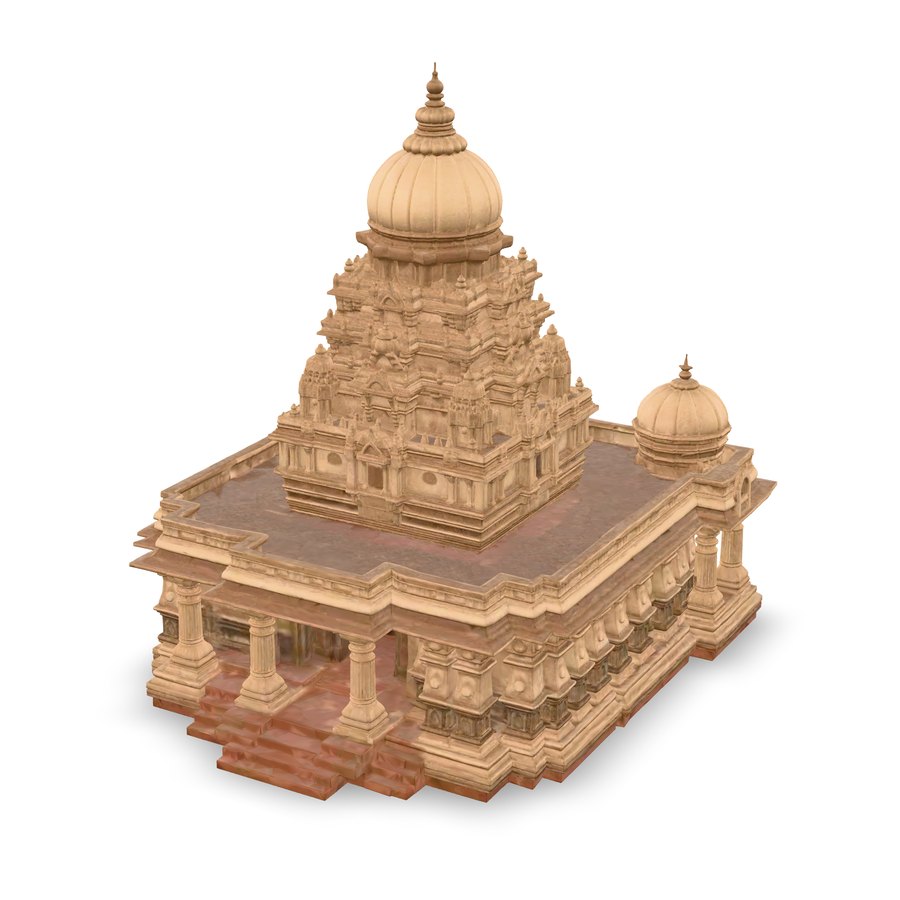
“Though the great Cholas are no more yet their name is still remembered with great pride because of their highest achievements in the domain of art and architecture.” Comment.
Approach · directive: “comment”
What it asks · Test the claim that the imperial Cholas are remembered chiefly for art and architecture — support it with evidence and add their other enduring legacies.
It asks 2 things — answer each
- Comment: show why Chola art and architecture (temples, bronzes, sculpture, painting) is their most remembered achievement
- Qualify the claim: the Cholas' other enduring legacies and what their art rested on
Open with · Rajaraja I's Brihadisvara at Thanjavur, called Dakshina Meru in its inscriptions, was consecrated in 1009–10 CE; the claim holds, but the temples carried far more than art.
Cover
- Three UNESCO 'Great Living Chola Temples': Thanjavur (Rajaraja I, 1009–10 CE), Gangaikondacholisvaram (Rajendra I, 1035, 53-m vimana), Darasuram (Rajaraja II, 24-m vimana).
- Dravida form at its peak: stepped-pyramid vimana, gopuram and compound wall became the South Indian template.
- Bronzes: NCERT calls bronze-making the most distinctive temple craft; Nataraja icons and processional images of Nayanar saints.
- Temple as institution: nuclei of settlements and craft production, maintaining priests, cooks, musicians and dancers on endowed land.
- Village sabha: 10th-century Uttaramerur inscriptions record qualifications, duties and sealed ballot boxes.
- Sea power: Rajendra I's maritime expedition to South-East Asia, its 1,000th year marked at Gangaikonda Cholapuram in July 2025.
- Critical view: brahmadeya and devadana grants, war booty and peasant surplus paid for the grandeur and deepened hierarchy.
Close with · The pride is deserved, but its object is wider than art: Chola temples were the economic, social and cultural hubs of their age, so the stone remembers a whole civilisation.
Add value (verified)
- UNESCO inscribed the three Chola temples as the ‘Great Living Chola Temples’ World Heritage site.Great Living Chola Temples — UNESCO World Heritage Centre ↗“The site includes three great 11th- and 12th-century Temples: the Brihadisvara Temple at Thanjavur, the Brihadisvara Temple at Gangaikondacholisvaram and the Airavatesvara Temple at Darasuram.”
- UNESCO: Rajaraja I (985–1012 CE) began the Thanjavur temple, known in inscriptions as Dakshina Meru, around 1003–04 CE and consecrated it in 1009–10 CE.Great Living Chola Temples — UNESCO World Heritage Centre ↗“the construction of this temple was inaugurated by the Chola King, Rajaraja I (985-1012 CE) possibly in the 19th regal year (1003-1004 CE) and consecrated by his own hands in the 25th regal year (1009-1010 CE)”
- UNESCO: Rajendra I's Gangaikondacholisvaram was completed in 1035, with a 53-m vimana that curves upward, unlike Thanjavur's straight tower.Great Living Chola Temples — UNESCO World Heritage Centre ↗“The Temple of Gangaikondacholisvaram, built by Rajendra I, was completed in 1035. Its 53-m vimana (sanctum tower) has recessed corners and a graceful upward curving movement”
- UNESCO: Rajaraja II built the Airavatesvara temple at Darasuram with a 24-m vimana; the temples show Chola achievement in architecture, sculpture, painting and bronze casting.Great Living Chola Temples — UNESCO World Heritage Centre ↗“The Airavatesvara temple complex, built by Rajaraja II, at Darasuram features a 24-m vimana and a stone image of Shiva. The temples testify to the brilliant achievements of the Chola in architecture, sculpture, painting and bronze casting.”
- UNESCO: the Thanjavur temple is called Dakshina Meru in its inscriptions.Great Living Chola Temples — UNESCO World Heritage Centre ↗“Known in the inscriptions as Dakshina Meru”
- On 27 July 2025 the Prime Minister attended the Aadi Thiruvathirai festival at Gangaikonda Cholapuram commemorating 1,000 years of Rajendra Chola's maritime expedition to South-East Asia.PM's programme, 26–27 July 2025, Tamil Nadu — PMIndia (Prime Minister's Office) ↗“Occasion of adi thiruvathirai festival & commemoration of 1000 years of rajendra chola’s maritime expedition of south east asia”
Question: UPSC's CS (Main) 2024, GS Paper I — paper ↗. Approach: Minimalist IAS, checked 16 Oct 2026 (how we verify) — UPSC publishes no model answers. ·
Model answer· 294words · Minimalist IAS
Rajaraja I's Brihadisvara at Thanjavur, called Dakshina Meru in its inscriptions, was consecrated in 1009–10 CE; with two later shrines it forms UNESCO's Great Living Chola Temples. The claim holds, but the temples carried far more than art.
Why Chola art and architecture endure
| Temple | Builder | Hallmark |
|---|---|---|
| Brihadisvara, Thanjavur | Rajaraja I | Straight, severe tower |
| Gangaikondacholisvaram | Rajendra I (1035) | 53-m curving vimana |
| Airavatesvara, Darasuram | Rajaraja II | 24-m vimana |
- Dravida style at its peak: the stepped-pyramid vimana, gopuram gateways and enclosing walls became the template for later South Indian temples.
- Bronzes: NCERT calls bronze-making the most distinctive temple craft; lost-wax icons such as the Nataraja remain India's best-known sculptures.
- Bhakti in metal: Chola kings built Shiva temples at Chidambaram, Thanjavur and Gangaikondacholapuram; images of Appar, Sambandar and Sundarar were carried in festival processions.
- Total art: UNESCO credits these temples with brilliant achievement in architecture, sculpture, painting and bronze casting together.
Why the claim needs qualifying
- Temple as institution: temples were nuclei of new settlements and centres of craft production; endowed land maintained priests, cooks, musicians and dancers.
- Village self-government: the 10th-century Uttaramerur inscriptions record qualifications, duties and sealed ballot boxes for electing the village sabha.
- Sea power: Rajendra I's maritime expedition to South-East Asia was so decisive that India marked its 1,000th year at Gangaikonda Cholapuram in July 2025.
- Agrarian state: inscriptions classify land, from brahmadeya gifted to Brahmanas to devadana gifted to temples, revealing a careful revenue order.
- A critical view: the grandeur rested on war booty and peasant surplus; land grants also hardened caste hierarchy, so the temples record power as well as piety.
The pride is deserved, but its object is wider than art: Chola temples were the economic, social and cultural hubs of their age, so the stone remembers a whole civilisation.
Prepared by Minimalist IAS to the answer standard of Shivam Singh (mentor, 7 years) · facts checked against official sources (how we verify) · updated 16 Oct 2026. UPSC publishes no model answers: compare your structure and coverage with this, then write your own.