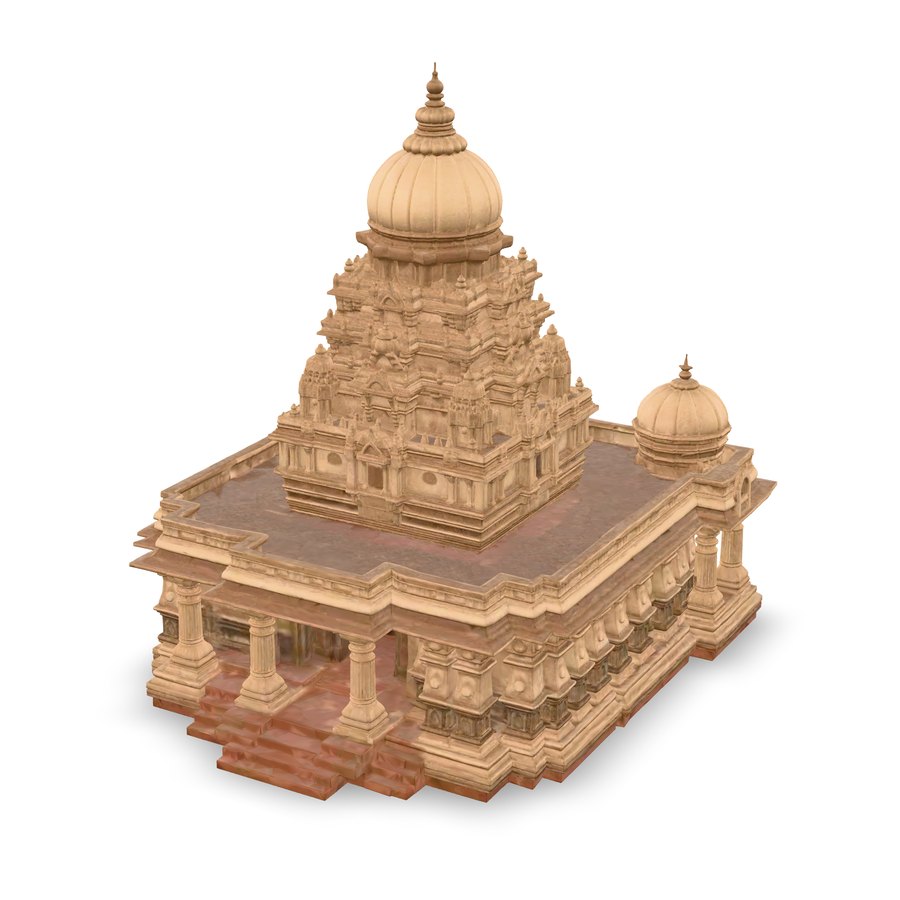
Estimate the contribution of Pallavas of Kanchi for the development of art and literature of South India.
Approach · directive: “estimate”
What it asks · Weigh (not merely list) the Pallava contribution from roughly the 6th to 9th century CE to South Indian architecture, sculpture, painting and to Sanskrit and Tamil literature.
It asks 2 things — answer each
- Estimate the Pallava contribution to art: rock-cut, monolithic and structural architecture, sculpture and painting
- Estimate their contribution to literature: Sanskrit, Tamil bhakti and learning at Kanchi, and weigh how far later dynasties built on it
Open with · UNESCO records that the Mahabalipuram monuments were founded by the Pallava kings in the 7th and 8th centuries; from Kanchipuram the dynasty shaped the Dravida temple and fostered Sanskrit and Tamil.
Cover
- Visual: a table of the three building stages, each with its ruler and a real site.
- Rock-cut stage: Mahendravarman I, titled Vichitrachitta, cut cave shrines such as Mandagapattu.
- Monolithic stage and relief: Mamalla's rathas and the open-air Arjuna's Penance at Mamallapuram, highlighted by UNESCO.
- Structural stage: Rajasimha (700–728 CE) built the Shore Temple and Kailasanatha; Vaikuntha Perumal followed; Kailasanatha keeps traces of painting.
- Spread: the Virupaksha temple at Pattadakal is widely held to follow the Kailasanatha model.
- Literature: Mahendravarman I's satirical Mattavilasa Prahasana, the poet Dandin, Kanchi's ghatika; Nayanar and Alvar hymns from c. sixth century.
- Assessment: formative rather than monumental; the Cholas scaled up a Pallava grammar.
Close with · By making the temple a carved text of myth and devotion, the Pallavas gave the Cholas the language they would enlarge.
Add value (verified)
- UNESCO: the Group of Monuments at Mahabalipuram, a World Heritage site, was founded by the Pallava kings and carved in the 7th and 8th centuries.Group of Monuments at Mahabalipuram — UNESCO World Heritage Centre ↗“This group of sanctuaries, founded by the Pallava kings, was carved out of rock along the Coromandel coast in the 7th and 8th centuries.”
- UNESCO: Mahabalipuram is known especially for its rathas (temples in the form of chariots), cave mandapas and giant open-air reliefs such as the 'Descent of the Ganges'.Group of Monuments at Mahabalipuram — UNESCO World Heritage Centre ↗“It is known especially for its rathas (temples in the form of chariots), mandapas (cave sanctuaries), giant open-air reliefs such as the famous 'Descent of the Ganges'”
- UNESCO: of the four great reliefs at Mamallapuram, Arjuna's Penance and Govardhanadhari are the most noteworthy; King Rajasimha introduced structural architecture on a grand scale.Group of Monuments at Mahabalipuram — UNESCO World Heritage Centre ↗“King Rajasimha introduced structural architecture on a grand scale.”
Question: UPSC's CS (Main) 2024, GS Paper I — paper ↗. Approach: Minimalist IAS, checked 16 Oct 2026 (how we verify) — UPSC publishes no model answers. ·
Model answer· 223words · Minimalist IAS
UNESCO records that the Mahabalipuram monuments were founded by the Pallava kings and carved in the 7th and 8th centuries. Ruling from Kanchipuram, the dynasty took South Indian art from caves to the structural Dravida temple.
Contribution to art
| Stage | Ruler | Example |
|---|---|---|
| Rock-cut | Mahendravarman I | Mandagapattu cave shrine |
| Monolithic | Narasimhavarman I 'Mamalla' | Rathas, Mamallapuram |
| Structural | Rajasimha (700–728 CE) | Shore Temple; Kailasanatha, Kanchi |
- Experiment: Mahendravarman I, titled Vichitrachitta (curious-minded), moved temple building into living rock.
- Sculpture: the rathas (temples shaped as chariots) and giant open-air reliefs such as Arjuna's Penance show a rare narrative realism.
- Structural temples: in UNESCO's words, Rajasimha introduced structural architecture on a grand scale; Vaikuntha Perumal followed.
- Painting: Kailasanatha's nearly fifty cells keep traces of murals in red and yellow.
- Spread: the Virupaksha temple at Pattadakal is widely held to follow the Kailasanatha model.
Contribution to literature
- Sanskrit: Mahendravarman I wrote the satirical play Mattavilasa Prahasana; the court hosted the poet Dandin; Kanchi's ghatika drew scholars.
- Tamil bhakti: Nayanar and Alvar saints sang from c. sixth century; the shrines they praised later grew into great temples.
Estimate
- Formative, not monumental: Pallava vimanas stayed modest; the Cholas scaled them up, but on a plan and sculptural grammar the Pallavas created.
By making the temple a carved text of myth and devotion, the Pallavas gave the Cholas the language they would enlarge.
Prepared by Minimalist IAS to the answer standard of Shivam Singh (mentor, 7 years) · facts checked against official sources (how we verify) · updated 16 Oct 2026. UPSC publishes no model answers: compare your structure and coverage with this, then write your own.