Minimalist IAS
CSAT

CSAT · 43 questions

Counting, permutations & probability

Every UPSC CSAT question on this topic, 2016–2026, newest first. Tap an option to check yourself; the answer and explanation open below it.

Counting, permutations & probability questions per year: 2016: 4, 2017: 3, 2018: 4, 2019: 4, 2020: 2, 2021: 3, 2022: 8, 2023: 11, 2024: 1, 2025: 0, 2026: 3 Asked in 10 of 11 years · most in 2023 (11)
Timed · 30 minutes a set Practise Counting, permutations & probability as timed tests 2 sets of about 20 questions with UPSC's CSAT marking. Start practising

UPSC syllabus: “Basic numeracy (numbers and their relations, orders of magnitude, etc.) (Class X level), Data interpretation (charts, graphs, tables, data sufficiency etc. — Class X level);” Sub-topics in the detailed syllabus →

Showing 31–43 of 43, newest first.

किसी घन के प्रत्येक फलक को काले या सफेद रंग से रँगा जा सकता है । उस घन को कितने विभिन्न तरीकों से रँगा जा सकता है ?

Read this question in English

Each face of a cube can be painted in black or white colours. In how many different ways can the cube be painted?

(a) 9 · (b) 10 · (c) 11 · (d) 12

उत्तर और व्याख्या · explanation in English

Answer: (b) 10

Treating paintings that can be turned into one another as the same, count by the number of black faces: 0, 1, 5 or 6 black faces give one pattern each, while 2, 3 or 4 give two each. Total 1 + 1 + 2 + 2 + 2 + 1 + 1 = 10.

  1. Count by the number of black faces; rotations of the cube give the same painting.
  2. 0 black: 1 way. 1 black: 1 way (any face can be turned to the top).
  3. 2 black: adjacent or opposite → 2 ways.
  4. 3 black: all three meeting at a corner, or in a band (two opposite faces plus one between) → 2 ways.
  5. 4 black = 2 white → 2 ways; 5 black → 1 way; 6 black → 1 way.
  6. Total = 1 + 1 + 2 + 2 + 2 + 1 + 1 = 10.

Remember · For two-colour cube patterns, count by faces of one colour; k and 6 − k faces give the same count.

Question and answer: UPSC's official GS Paper II (2019, Series A) — paper ↗ · answer key ↗. Explanation: Minimalist IAS, checked 30 Sept 2026 (how we verify). Permalink ·
समीकरण x + y + z = 6 को कितने त्रिक (x, y, z) संतुष्ट करते हैं, जहाँ x, y और z धनपूर्ण संख्याएँ हैं ?

Read this question in English

How many triplets (x, y, z) satisfy the equation x + y + z = 6, where x, y and z are natural numbers?

(a) 4 · (b) 5 · (c) 9 · (d) 10

उत्तर और व्याख्या · explanation in English

Answer: (d) 10

Each of x, y and z is at least 1, so we split 6 units into three positive parts: 5C2 = 10 ordered triplets.

  1. Natural numbers start from 1, so x, y, z ≥ 1.
  2. Line up 6 units and choose 2 of the 5 gaps between them to cut into three positive parts: 5C2 = 10.
  3. Check by listing: (4, 1, 1) in 3 orders, (3, 2, 1) in 6 orders, (2, 2, 2) in 1 order → 3 + 6 + 1 = 10.

Remember · Positive solutions of x₁ + … + xₖ = n number (n − 1)C(k − 1); order matters in triplets.

Question and answer: UPSC's official GS Paper II (2019, Series A) — paper ↗ · answer key ↗. Explanation: Minimalist IAS, checked 30 Sept 2026 (how we verify). Permalink ·

एक अष्टभुज के शीर्षों को जोड़कर कितने विकर्ण खींचे जा सकते हैं?

Read this question in English

How many diagonals can be drawn by joining the vertices of an octagon?

(a) 20 · (b) 24 · (c) 28 · (d) 64

उत्तर और व्याख्या · explanation in English

Answer: (a) 20

Any two of the 8 vertices can be joined in C(8, 2) = 28 ways. Eight of those joins are the sides, so 20 are diagonals.

  1. Lines joining two vertices: C(8, 2) = 8 × 7 ÷ 2 = 28.
  2. Of these, 8 are sides of the octagon.
  3. Diagonals = 28 − 8 = 20.
  4. Check with the formula n(n − 3)/2 = 8 × 5 ÷ 2 = 20.

Remember · Diagonals of an n-sided polygon = n(n − 3)/2: each vertex joins n − 3 non-adjacent vertices, and each diagonal is counted twice.

Question and answer: UPSC's official GS Paper II (2018, Series A) — paper ↗ · answer key ↗. Explanation: Minimalist IAS, checked 30 Sept 2026 (how we verify). Permalink ·

यदि 700 से 1000 तक सभी संख्याएँ लिखी जाएँ, तो ऐसी कितनी संख्याएँ आती हैं जिनमें सैकड़े का अंक, दहाई के अंक से तथा दहाई का अंक, इकाई के अंक से बड़ा है?

Read this question in English

While writing all the numbers from 700 to 1000, how many numbers occur in which the digit at hundred’s place is greater than the digit at ten’s place, and the digit at ten’s place is greater than the digit at unit’s place?

(a) 61 · (b) 64 · (c) 85 · (d) 91

उत्तर और व्याख्या · explanation in English

Answer: (c) 85

Fix the hundreds digit h (7, 8 or 9). Any two different digits smaller than h, written in decreasing order, give exactly one valid number, so the count is C(7, 2) + C(8, 2) + C(9, 2) = 21 + 28 + 36 = 85.

  1. Hundreds digit 7: tens and units are two different digits from 0–6, written in decreasing order: C(7, 2) = 21.
  2. Hundreds digit 8: two digits from 0–7: C(8, 2) = 28.
  3. Hundreds digit 9: two digits from 0–8: C(9, 2) = 36.
  4. 1000 does not qualify. Total = 21 + 28 + 36 = 85.
  5. Check for 7: tens digit 6 allows 6 numbers (760–765), tens 5 allows 5, and so on: 6 + 5 + 4 + 3 + 2 + 1 = 21.

Remember · For strictly decreasing digits, choosing the digits fixes their order: count with combinations, not arrangements.

Question and answer: UPSC's official GS Paper II (2018, Series A) — paper ↗ · answer key ↗. Explanation: Minimalist IAS, checked 30 Sept 2026 (how we verify). Permalink ·

किसी झोले में 15 लाल गेंदें और 20 काली गेंदें हैं। प्रत्येक गेंद पर 1 या 2 या 3 की संख्या लिखी है। लाल गेंदों के 20% पर संख्या 1 तथा उनके 40% पर संख्या 3 लिखी है। इसी प्रकार, काली गेंदों में 45% पर संख्या 2 तथा 30% पर संख्या 3 लिखी है। एक बालक यदृच्छया एक गेंद निकालता है। यह गेंद यदि लाल है और उस पर 3 की संख्या है अथवा यदि गेंद काली है और उस पर 1 या 2 की संख्या है, तो बालक जीत जाता है। उसके जीतने की प्रायिकता क्या है?

Read this question in English

A bag contains 15 red balls and 20 black balls. Each ball is numbered either 1 or 2 or 3. 20% of the red balls are numbered 1 and 40% of them are numbered 3. Similarly, among the black balls, 45% are numbered 2 and 30% are numbered 3. A boy picks a ball at random. He wins if the ball is red and numbered 3 or if it is black and numbered 1 or 2. What are the chances of his winning?

(a) 1/2 · (b) 4/7 · (c) 5/9 · (d) 12/13

उत्तर और व्याख्या · explanation in English

Answer: (b) 4/7

Winning balls are the red ones numbered 3 (40% of 15 = 6) and the black ones numbered 1 or 2 (70% of 20 = 14). That is 20 winning balls out of 35, a chance of 4/7.

  1. Red numbered 3: 40% of 15 = 6.
  2. Black numbered 3: 30% of 20 = 6, so black numbered 1 or 2 = 20 − 6 = 14.
  3. Winning balls = 6 + 14 = 20 out of 35.
  4. Probability = 20/35 = 4/7.

Remember · Count the favourable balls directly; use a complement (100% − 30%) when it is quicker than adding separate percentages.

Question and answer: UPSC's official GS Paper II (2018, Series A) — paper ↗ · answer key ↗. Explanation: Minimalist IAS, checked 30 Sept 2026 (how we verify). Permalink ·

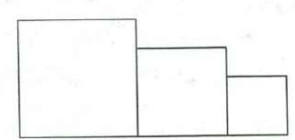
एक खेल प्रतियोगिता के लिए लकड़ी के तीन खण्डकों को मिलाकर बने विजेता-मंच का आकार नीचे दिया गया है :

A winners' stand of three rectangular blocks side by side: the tallest on the left, a middle-height block next to it and the shortest on the right.
From UPSC's question paper.

उपलब्ध छः विभिन्न रंगों में से रंग चुनने हैं और लकड़ी के तीनों खण्डकों में से प्रत्येक को इस प्रकार रंगा जाना है कि कोई भी दो खण्डकों का रंग एकसमान न हो। विजेता-मंच को कितने अलग-अलग तरीकों से रंगा जा सकता है?

Read this question in English

For a sports meet, a winners’ stand comprising three wooden blocks is in the following form:

There are six different colours available to choose from and each of the three wooden blocks is to be painted such that no two of them has the same colour. In how many different ways can the winners’ stand be painted?

(a) 120 · (b) 81 · (c) 66 · (d) 36

उत्तर और व्याख्या · explanation in English

Answer: (a) 120

The three blocks are different (first, second and third place), so the order of colours matters. With six colours and no repeats there are 6 × 5 × 4 = 120 ways.

  1. The blocks differ in height, so each assignment of colours to blocks is a different painting.
  2. Tallest block: 6 choices; next block: 5; last block: 4.
  3. Ways = 6 × 5 × 4 = 120 (that is, ⁶P₃).

Remember · When the positions are distinct, use permutations: n × (n − 1) × … for as many positions as are filled.

Question and answer: UPSC's official GS Paper II (2018, Series A) — paper ↗ · answer key ↗. Explanation: Minimalist IAS, checked 1 Oct 2026 (how we verify). Permalink ·

एक पट्ट पर 4 क्षैतिज और 4 ऊर्ध्वाधर रेखाएँ हैं, जो परस्पर समान्तर और समदूरस्थ हैं। इनसे अधिकतम कितने आयत और वर्ग बनाए जा सकते हैं?

Read this question in English

There are 4 horizontal and 4 vertical lines, parallel and equidistant to one another on a board. What is the maximum number of rectangles and squares that can be formed?

(a) 16 · (b) 24 · (c) 36 · (d) 42

उत्तर और व्याख्या · explanation in English

Answer: (c) 36

Every rectangle, squares included, is fixed by choosing 2 of the 4 horizontal lines and 2 of the 4 vertical lines. That gives 6 × 6 = 36.

  1. Ways to choose 2 horizontal lines from 4 = 4C2 = 6.
  2. Ways to choose 2 vertical lines from 4 = 6.
  3. Each pair of choices gives one rectangle: 6 × 6 = 36 (squares included).
  4. Check: the grid has 3 × 3 unit cells; squares = 9 + 4 + 1 = 14 and non-square rectangles = 22; 14 + 22 = 36.

Remember · Rectangles in a grid of m horizontal and n vertical lines = mC2 × nC2; the squares are already included.

Question and answer: UPSC's official GS Paper II (2017, Series A) — paper ↗ · answer key ↗. Explanation: Minimalist IAS, checked 30 Sept 2026 (how we verify). Permalink ·

एक थैले में 20 गेंदें हैं। 8 गेंदें हरी हैं, 7 सफ़ेद हैं और 5 लाल हैं। आँख बंद कर, थैले में से न्यूनतम कितनी गेंदें निकालना आवश्यक है (किसी को भी बिना बदले) जिससे सुनिश्चित हो कि प्रत्येक रंग की कम-से-कम एक गेंद निकली हो?

Read this question in English

A bag contains 20 balls. 8 balls are green, 7 are white and 5 are red. What is the minimum number of balls that must be picked up from the bag blindfolded (without replacing any of it) to be assured of picking at least one ball of each colour?

(a) 17 · (b) 16 · (c) 13 · (d) 11

उत्तर और व्याख्या · explanation in English

Answer: (b) 16

In the worst case you pick all 8 green and all 7 white balls first — 15 balls and still no red. The next ball must be red, so 16 balls guarantee at least one of each colour.

  1. Worst case: the two largest colour groups come out first — 8 green + 7 white = 15 balls.
  2. Only red balls remain, so the 16th ball is red.
  3. 16 is enough in every case, and 15 is not (the all-green-and-white case), so the minimum is 16.

Remember · To be assured of one of each colour, take every ball except the smallest colour group, then add 1.

Question and answer: UPSC's official GS Paper II (2017, Series A) — paper ↗ · answer key ↗. Explanation: Minimalist IAS, checked 30 Sept 2026 (how we verify). Permalink ·

यदि 2 लड़कों और 2 लड़कियों को एक पंक्ति में इस व्यवस्था में खड़ा करना हो कि लड़कियाँ एक-दूसरे के अगल-बगल खड़ी न हों, तो कितनी संभव व्यवस्थाएँ हो सकती हैं?

Read this question in English

If 2 boys and 2 girls are to be arranged in a row so that the girls are not next to each other, how many possible arrangements are there?

(a) 3 · (b) 6 · (c) 12 · (d) 24

उत्तर और व्याख्या · explanation in English

Answer: (c) 12

There are 4! = 24 arrangements in all. Treating the two girls as one block gives 3! × 2 = 12 arrangements in which they sit together, so 24 − 12 = 12 keep the girls apart.

  1. All arrangements of 4 different children: 4! = 24.
  2. Girls together: treat them as one unit → 3 units → 3! = 6, and the girls can swap within the unit → 6 × 2 = 12.
  3. Girls not together: 24 − 12 = 12.
  4. Check (gap method): arrange the boys in 2! = 2 ways, leaving 3 gaps; place the two girls in 2 of the gaps in 3 × 2 = 6 ways; total 2 × 6 = 12.

Remember · 'Not together' = total − together; or seat the others first and put the separated people in the gaps.

Question and answer: UPSC's official GS Paper II (2017, Series A) — paper ↗ · answer key ↗. Explanation: Minimalist IAS, checked 30 Sept 2026 (how we verify). Permalink ·

एक प्रश्न-पत्र में पांच प्रश्नों पर प्रयास किए जाने हैं और प्रत्येक प्रश्न के उत्तर के दो विकल्प हैं – सही (T) अथवा गलत (F)। यह दिया गया है कि किन्हीं भी दो परीक्षार्थियों ने पाँचों प्रश्नों के उत्तर एकसमान अनुक्रम में नहीं दिए हैं। ऐसा होने के लिए परीक्षार्थियों की अधिकतम संख्या कितनी है ?

Read this question in English

In a question paper there are five questions to be attempted and answer to each question has two choices – True (T) or False (F). It is given that no two candidates have given the answers to the five questions in an identical sequence. For this to happen the maximum number of candidates is:

(a) 10 · (b) 18 · (c) 26 · (d) 32

उत्तर और व्याख्या · explanation in English

Answer: (d) 32

Each question can be answered in 2 ways, so there are 2⁵ = 32 different answer sequences. If no two candidates repeat a sequence, at most 32 candidates are possible.

  1. Each of the 5 questions has 2 possible answers.
  2. Distinct sequences = 2 × 2 × 2 × 2 × 2 = 2⁵ = 32.
  3. No two candidates share a sequence, so the maximum is 32.

Remember · Independent choices multiply: k options at each of n places give kⁿ sequences.

Question and answer: UPSC's official GS Paper II (2016, Series A) — paper ↗ · answer key ↗. Explanation: Minimalist IAS, checked 30 Sept 2026 (how we verify). Permalink ·

100 और 300 के बीच, 2 से शुरू होने वाली या 2 पर समाप्त होने वाली कितनी संख्याएं हैं ?

Read this question in English

How many numbers are there between 100 and 300 which either begin with or end with 2?

(a) 110 · (b) 111 · (c) 112 · (d) None of the above

उत्तर और व्याख्या · explanation in English

Answer: (a) 110

All numbers from 200 to 299 begin with 2 — 100 numbers — and 20 numbers from 102 to 292 end in 2. Ten of those (202 to 292) are counted twice, so the total is 100 + 20 − 10 = 110.

  1. Beginning with 2: 200 to 299 — 100 numbers.
  2. Ending in 2: 102, 112, …, 292 — 20 numbers.
  3. Both: 202, 212, …, 292 — 10 numbers.
  4. Total = 100 + 20 − 10 = 110.

Remember · 'Either … or' counting: add both groups, then subtract the overlap once.

Question and answer: UPSC's official GS Paper II (2016, Series A) — paper ↗ · answer key ↗. Explanation: Minimalist IAS, checked 30 Sept 2026 (how we verify). Permalink ·

अंक 1, 2, 3 और 4 को लेकर चार-अंकीय संख्याएं बनानी हैं। इन चार अंकों में से किसी एक की भी किसी भी रीति से पुनरावृत्ति नहीं करनी है, तथा

  1. 1.2 और 3 एक दूसरे के एकदम आगे पीछे नहीं हो सकते
  2. 2.3, 1 के एकदम पीछे नहीं हो सकता
  3. 3.4 अंतिम स्थान पर नहीं आ सकता
  4. 4.1 प्रथम स्थान पर नहीं आ सकता

कितनी पृथक संख्याएं बन सकती हैं ?

Read this question in English

Four-digit numbers are to be formed using the digits 1, 2, 3 and 4; and none of these four digits are repeated in any manner. Further,

1. 2 and 3 are not to immediately follow each other

2. 1 is not to be immediately followed by 3

3. 4 is not to appear at the last place

4. 1 is not to appear at the first place

How many different numbers can be formed?

(a) 6 · (b) 8 · (c) 9 · (d) None of the above

उत्तर और व्याख्या · explanation in English

Answer: (a) 6

Listing the arrangements by first digit (1 cannot lead) and striking out any with 2 and 3 side by side, with 1 directly before 3, or with 4 at the end leaves 2143, 2431, 3142, 3412, 3421 and 4312 — six numbers.

  1. 1 cannot come first, so the number starts with 2, 3 or 4.
  2. Starting with 2: 2143 and 2431 work (2134 and 2413 contain 13; 2314 and 2341 contain 23).
  3. Starting with 3: 3142, 3412 and 3421 work (3124 ends in 4; 3214 and 3241 contain 32).
  4. Starting with 4: only 4312 works (4123 and 4231 contain 23; 4132 and 4213 contain 13; 4321 contains 32).
  5. Total = 2 + 3 + 1 = 6.

Remember · With only 24 arrangements, list them systematically by first digit and strike out rule-breakers rather than trusting a formula with overlapping conditions.

Question and answer: UPSC's official GS Paper II (2016, Series A) — paper ↗ · answer key ↗. Explanation: Minimalist IAS, checked 30 Sept 2026 (how we verify). Permalink ·

तीरंदाजी की किसी वृत्ताकार प्लेट (टारगेट) को, जिसका व्यास 1 मीटर है, अन्दर से बाहर की ओर चार रंगों में – लाल, नीला, पीला और सफेद – रंगा गया है। लाल बैन्ड की त्रिज्या 0.20 मीटर है। बाकी बैन्डों की चौड़ाई एकसमान है। इस वृत्ताकार प्लेट (टारगेट) की ओर तीरंदाजों द्वारा तीर चलाए जाने पर, तीरों के टारगेट के लाल हिस्से (बैंड) में लगने की प्रायिकता क्या है ?

Read this question in English

A round archery target of diameter 1 m is marked with four scoring regions from the centre outwards as red, blue, yellow and white. The radius of the red band is 0.20 m. The width of all the remaining bands is equal. If archers throw arrows towards the target, what is the probability that the arrows fall in the red region of the archery target?

(a) 0.40 · (b) 0.20 · (c) 0.16 · (d) 0.04

उत्तर और व्याख्या · explanation in English

Answer: (c) 0.16

Taking every point of the target as equally likely, the probability is the red area over the whole area: (0.20 ÷ 0.50)² = 0.16. The widths of the other bands do not matter.

  1. Target radius = 1 m ÷ 2 = 0.50 m; red radius = 0.20 m.
  2. Probability = red area ÷ target area = (0.20/0.50)² = 0.4² = 0.16.

Remember · For circles, the ratio of areas is the square of the ratio of radii.

Question and answer: UPSC's official GS Paper II (2016, Series A) — paper ↗ · answer key ↗. Explanation: Minimalist IAS, checked 30 Sept 2026 (how we verify). Permalink ·

The Syllabus X-Ray of this topic

1 of its 3 sub-topics is High

0 Core · 1 High · 2 Steady · 0 Rare

  • HighCounting figures & cases · 37 questions

The X-Ray ranks all 928 sub-topics of the UPSC syllabus by what UPSC has asked since 2016. The 6 CSAT Core sub-topics are behind 50% of CSAT questions.

See the whole X-Ray →