निम्न आँकड़ों पर विचार कीजिए :
| वर्ष | जन्मदर | मृत्यु दर |
|---|---|---|
| 1911–1921 | 48·1 | 35·5 |
| 1921–1931 | 46·4 | 36·3 |
| 1931–1941 | 45·2 | 31·2 |
| 1941–1951 | 39·9 | 27·4 |
| 1951–1961 | 41·7 | 22·8 |
| 1961–1971 | 41·1 | 18·9 |
| 1971–1981 | 37·1 | 14·8 |
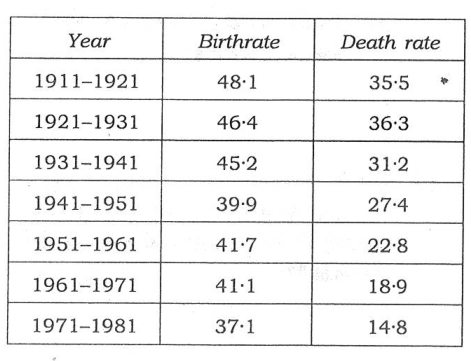
किस समयावधि में प्राकृतिक विकास दर अधिकतम थी?
Read this question in English
Consider the following data:
For which period was the natural growth rate maximum?
(a) 1911–1921 · (b) 1941–1951 · (c) 1961–1971 · (d) 1971–1981
उत्तर और व्याख्या · explanation in English
Answer: (d) 1971–1981
Natural growth rate is birth rate minus death rate. The gaps for the four offered periods are 12·6, 12·5, 22·2 and 22·3, so 1971–1981 is the highest, just ahead of 1961–1971.
- 1911–1921: 48·1 − 35·5 = 12·6.
- 1941–1951: 39·9 − 27·4 = 12·5.
- 1961–1971: 41·1 − 18·9 = 22·2.
- 1971–1981: 37·1 − 14·8 = 22·3 — the maximum.
- Check: the periods not offered are lower too (10·1, 14·0, 18·9).
Remember · Natural growth = birth rate − death rate. Compute only the offered periods, and compute the close ones exactly.
Question and answer: UPSC's official GS Paper II (2020, Series A) — paper ↗ · answer key ↗. Explanation: Minimalist IAS, checked 1 Oct 2026 (how we verify). ·